 The Drape Review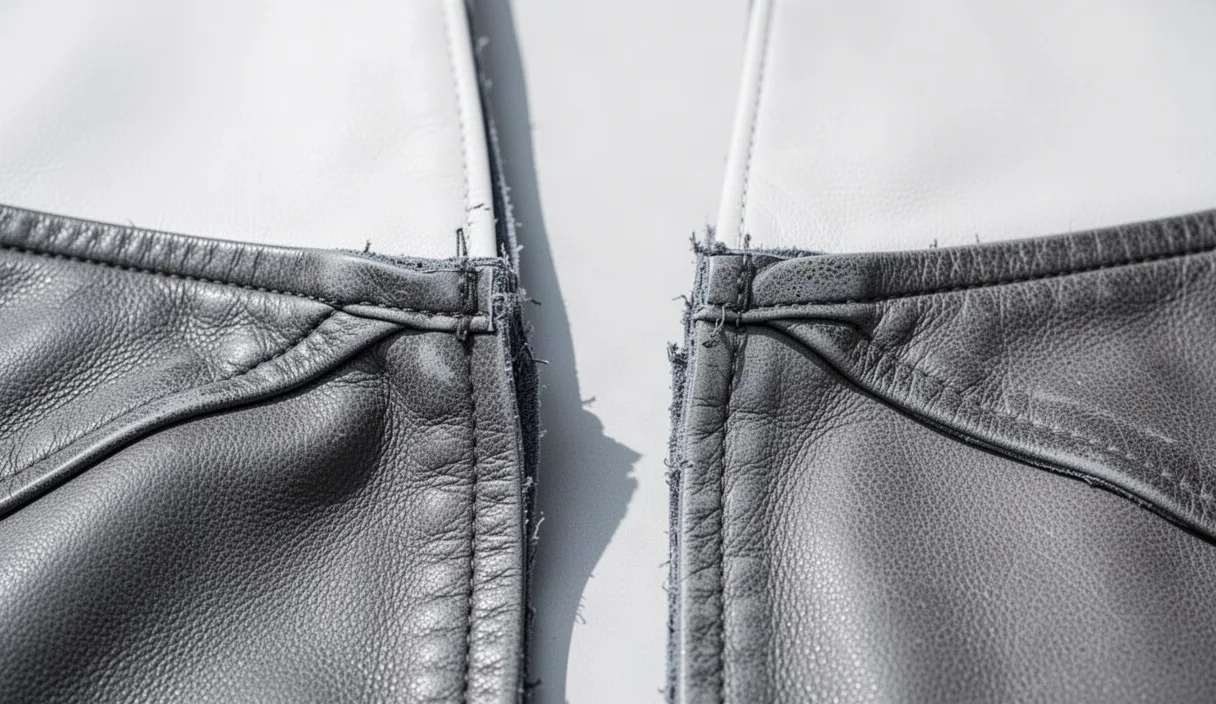
Leather identification is a practical skill, not a matter of taste. Real leather, officially labeled full-grain, top-grain, or genuine leather under most national labeling standards, comes from tanned animal hide. Faux leather, also called synthetic leather, PU leather, or pleather, is a polymer coating, usually polyurethane or PVC, applied to a fabric or fiber base. Both materials can look identical under store lighting, and both can be marketed with language that blurs the line intentionally or through careless translation on import tags.
This checklist is built for buyers standing in a store or looking at a listing photo, not for lab technicians with burn tests and chemical solvents. Every method below relies on senses and observation you can use in under two minutes per item. None of these tests is conclusive on its own; together, three or four of them give a reliable picture.
Why the Distinction Matters
Real and faux leather differ in durability, repairability, and aging behavior, which affects what you should pay and how you should care for the item. Full-grain leather develops a patina, meaning the surface darkens and softens with handling and sun exposure. This is expected and is not damage. Faux leather does not patina; it cracks, peels, or flakes at the coating layer once the polymer degrades, typically within 2 to 5 years of regular use depending on quality.
Repair options also diverge sharply. A scuffed or scratched leather bag can often be conditioned, re-dyed, or professionally restored by a leather repair specialist. A peeling faux leather surface generally cannot be restored; once the polyurethane coating separates from its fabric backing, the item is cosmetically finished, even if structurally intact.
Price expectations should follow from material, not the reverse. A jacket priced at 45 dollars is almost certainly not full-grain cowhide, regardless of what the tag claims, because raw hide costs alone usually exceed that figure before labor and cutting. Knowing the difference protects you from paying leather prices for a vinyl product, and just as often from dismissing a well-made faux leather item that was honestly priced and suits its purpose.
Checking the Smell and Texture
Smell is one of the fastest and most reliable indicators available to a buyer with no tools. Genuine leather has an organic, slightly sweet, earthy scent that comes from the tanning process, whether vegetable tanning or chromium tanning. This smell is present in the material itself, not sprayed on, so it persists for the life of the product and intensifies slightly in warm or humid conditions.
Faux leather typically smells like plastic or has a chemical, almost rubbery odor, especially noticeable right out of packaging or in a poorly ventilated store. Some manufacturers now add a synthetic "leather scent" to PU products specifically to defeat this test, so treat smell as a strong clue rather than final proof, particularly with new items purchased online where you cannot smell before buying.
Texture testing works alongside smell. Press a finger firmly into the material for two or three seconds, then release.
- Real leather shows a slight, temporary indentation and feels slightly different in temperature from one spot to the next, because hide is a natural material with varying density.
- Faux leather usually springs back instantly and feels uniform in temperature and texture across the entire surface, because it is a manufactured coating with no natural variation.
- Real leather feels slightly cool and then warms quickly to touch; faux leather often feels room-temperature from the start and stays that way.
Examining the Edges and Cut Lines
The edge of a hide or panel reveals construction details that a flat surface cannot. Turn the item over, or look inside a bag, wallet, or shoe at a seam, and examine the raw edge where the material was cut.
Genuine leather shows a fibrous, slightly irregular cross-section, similar to the cut end of a thick rope, because it is composed of layered collagen fibers. Edges are often painted, waxed, or burnished (heated and rubbed smooth) by the manufacturer, but even finished edges show some texture variation under close inspection or with a magnifying glass.
Faux leather shows a flat, uniform cross-section with a visible fabric or fiber mesh backing underneath the colored top coating. This backing is usually polyester knit, cotton blend, or a non-woven fiber mat, and it is the single most reliable visual giveaway available to an untrained buyer. If you can see or feel a woven or knitted texture on the underside of a "leather" item, it is synthetic, full stop.
One exception worth noting: bonded leather, a real category distinct from both full-grain and faux, is made from shredded leather scraps bonded to a fiber backing with polyurethane. It will also show a fiber backing at the edge, so this test alone cannot distinguish bonded leather from pure faux leather. Bonded leather is a lower grade of genuine material and should be priced and treated more like faux leather in terms of durability expectations.
Testing Flexibility and Grain Pattern
Fold a small, inconspicuous section of the material, such as a corner or an unused flap, and observe what happens to the surface.
| Observation | Real Leather | Faux Leather |
|---|---|---|
| Fold line | Fine wrinkles, no cracking | Sharp crease, may whiten or crack at the fold |
| Grain pattern | Irregular, with pores, scars, or slight blemishes | Repeating pattern, identical over large areas |
| Stretch response | Stretches slightly and recovers slowly | Stretches little or snaps back immediately |
| Pore visibility | Visible under magnification, irregular spacing | Absent, or printed/embossed uniformly |
Grain pattern is especially useful on larger surfaces like sofas, jacket backs, or large handbag panels. Real hide comes from an animal with a finite skin size, so a genuine leather sofa cushion will show natural variation from one panel to the next, including small scars, insect bite marks, or wrinkle lines near where the animal's joints were. Faux leather is produced on rolls, so the embossed grain pattern repeats identically every few inches, and you can often find the exact same "pore" cluster repeated multiple times if you look closely across a large panel.
Embossed genuine leather, where a grain pattern is stamped onto a lower-grade hide to look like a higher-grade one, complicates this test. Stamped grain on real leather will still show irregular variation at the edges of the stamped area and will not repeat with mechanical precision the way a faux leather roll does. When in doubt, compare the pattern across the widest possible surface area; faux leather's repetition becomes obvious past about 12 inches of continuous material.
Reading Material Labels Correctly
Labels are regulated in many countries but the terminology still causes confusion, partly because marketing language and legal labeling language are not the same thing. In the United States, the Federal Trade Commission requires that only hide-based material be called "leather" without qualification, but terms like "leather-look," "vegan leather," and "leatherette" are legal descriptions for synthetic materials and do not indicate real hide.
Useful terms to recognize when reading a tag or online listing:
- Full-grain leather: the entire natural grain layer is intact; highest durability and most visible natural variation.
- Top-grain leather: the outer surface is sanded and refinished; more uniform than full-grain, still genuine hide.
- Genuine leather: a legal term meaning real hide, but often the lowest grade of real leather available; does not imply high quality.
- Bonded leather: shredded leather fiber bonded with polyurethane; technically contains leather content but behaves like faux leather in daily use.
- PU leather, vegan leather, faux leather: synthetic, no hide content regardless of how the surface looks or feels.
Check the care label and the material composition line separately; a tag might say "leather upper" on a shoe while the lining and sole are synthetic, which is standard and not misleading. If a listing says "leather" with no qualifier on a product priced well below typical leather goods pricing for that category, treat the claim with skepticism and move to the physical tests above before purchasing, if an in-person inspection is possible.
Price Signals and Their Limits
Price is a useful filter but not a determinant. As a rough guide, a genuine full-grain leather jacket from a mid-range retailer typically starts around 250 to 400 dollars in raw material and labor cost alone, before brand markup. A small leather wallet with minimal material use might reasonably start around 40 to 60 dollars for genuine hide. Items priced well under these ranges are more likely synthetic, mislabeled, or made from heavily processed low-grade hide such as bonded leather.
However, high price does not guarantee genuine leather, and low price does not guarantee faux leather. Some premium faux leather lines, particularly in sustainable or vegan fashion brands, price their synthetic goods at 150 dollars or more because of design, brand positioning, or specialty coatings like mushroom-based or cactus-based leather alternatives, which are genuinely more expensive to produce than standard PU. Conversely, discount outlet pricing or end-of-season clearance can put real leather goods at prices that look suspiciously low for reasons unrelated to the material itself.
Use price as a first filter to decide whether closer inspection is worth your time, not as a final verdict. An item priced like leather that fails the smell, edge, and grain tests above is the clearest warning sign of mislabeling or an honest mistake by a reseller who didn't verify the original listing.
When to Ask the Seller Directly
If physical inspection is impossible, as with most online purchases before delivery, ask the seller or manufacturer direct questions rather than relying on the product title alone. Reasonable questions include: What is the exact material composition, including the backing layer? Is this full-grain, top-grain, genuine, or bonded leather? If synthetic, what is the base material, PU or PVC?
A seller who answers specifically, citing a material code or composition percentage, is more trustworthy than one who repeats marketing language ("premium leather feel") without specifics. For significant purchases, over roughly 200 dollars, request close-up photos of an unfinished edge or the underside of the material, since this is the single most diagnostic area as described above.
If a seller refuses to clarify material composition on a specific request, or the return policy excludes material disputes, treat this as a signal to reconsider the purchase rather than proceed on trust. For high-value items such as designer handbags or furniture, consider consulting an independent leather appraiser or authentication service before completing a purchase, particularly in resale or secondhand markets where original tags may be missing or swapped.
Common Mistakes
Buyers frequently rely on a single test and treat it as conclusive, such as smell alone, without accounting for synthetic leather scents now used by some manufacturers specifically to pass casual sniff tests. Relying on softness as a leather indicator is similarly unreliable, since high-quality PU can be engineered softer than many genuine hides, especially lower-grade split leather.
Another common error is assuming "genuine leather" tags indicate high quality, when the term legally describes the lowest standard grade of real hide, below top-grain and full-grain. Buyers also sometimes confuse bonded leather, a blended product with real leather fiber content, for either fully genuine or fully synthetic material, when it behaves closer to faux leather in longevity despite its partial hide content.
Next Steps for Buyers
Before any leather purchase, run at least three of the five tests above, smell, texture, edge inspection, flex test, and grain pattern check, rather than relying on any single indicator or the listing description alone. For in-person shopping, prioritize the edge inspection and grain pattern comparison, since these require no special tools and are the hardest for manufacturers to disguise.
For online purchases, request specific material composition details and close-up edge photos before buying, and confirm the seller's return policy explicitly covers material misrepresentation. If you're evaluating a significant investment piece, a vintage item, or a designer resale purchase where authenticity carries real financial weight, consult a professional leather appraiser rather than relying solely on a buyer's checklist, since professional authentication can involve chemical or microscopic testing beyond what any visual or tactile method can confirm.