 The Drape Review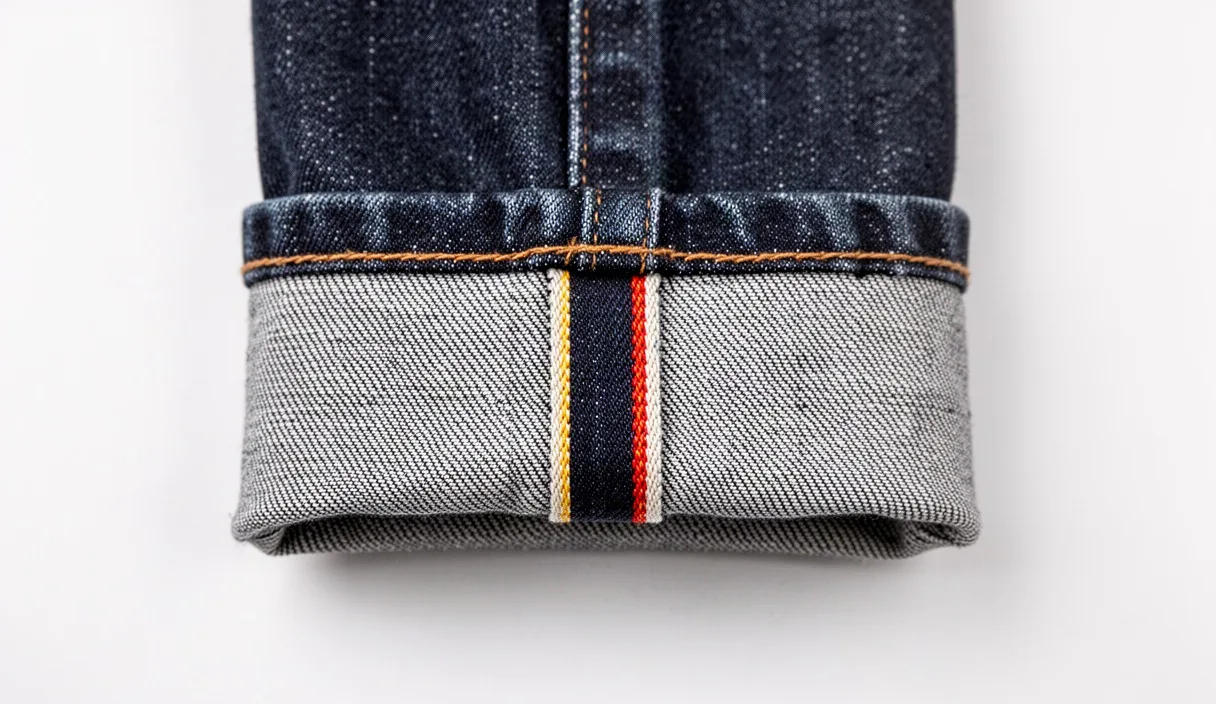
The terms "raw" and "selvedge" appear together so often in denim marketing that many buyers assume they mean the same thing, or that one implies the other. They do not. Each term describes a separate attribute of a pair of jeans: one refers to how the fabric was woven and finished at the edge, the other refers to whether the fabric was washed before the garment was cut and sewn. A pair of jeans can be raw without being selvedge, selvedge without being raw, both, or neither.
This article defines each term precisely, explains the weaving process that produces a selvedge edge, and clarifies why the two attributes get bundled together in retail descriptions. It also covers how to verify these claims visually, what the price and durability differences actually are, and which combination makes sense for different kinds of buyers.
What "Selvedge" Refers To
Selvedge (sometimes spelled "selvage") refers to the self-finished edge of a woven fabric, the edge that runs parallel to the length of the cloth as it comes off the loom. The word is a contraction of "self" and "edge." On any woven textile, the selvedge is the border where the weft thread (the horizontal thread) turns back on itself at the end of each pass, creating a tightly bound edge that does not fray.
In denim specifically, "selvedge" has come to refer almost exclusively to fabric woven on narrow, vintage-style shuttle looms, which produce a visibly finished edge, typically with a colored thread (often red, but also white, yellow, pink, or other colors depending on the mill) running along it. This colored line is called the "selvedge ID" and is sometimes used to identify which mill or even which specific loom produced the fabric.
Every woven fabric technically has a selvedge, including fabric made on modern projectile and air-jet looms. The distinction in denim marketing is not whether an edge exists, but whether that edge is the tightly woven, self-finished type produced by shuttle looms, versus the loosely finished or serged edge typical of wide modern looms. When a brand says "selvedge denim," they mean the shuttle-loom version specifically.
How Selvedge Is Woven
Shuttle looms weave fabric by passing a single weft thread back and forth across the warp threads using a shuttle, a small device that carries the thread through the loom. Because the same continuous thread goes back and forth, it naturally loops back at both edges of the fabric, binding the outermost warp threads in place and preventing fraying without any additional finishing step.
Modern projectile and air-jet looms work differently: they shoot the weft thread across the fabric and cut it at each pass rather than looping it back, which is faster and allows for much wider fabric widths, often 60 inches or more, compared to the roughly 29 to 32 inches typical of a shuttle loom. The cut edges on these wider fabrics fray unless they are serged or otherwise finished after weaving.
The narrower width of shuttle-loom fabric has a direct, practical consequence: a single pair of jeans requires cutting from a narrower bolt, which produces more fabric waste and requires more linear yards of cloth per garment. This is one of the concrete reasons selvedge denim costs more to produce, independent of any difference in yarn quality.
Shuttle looms also run at lower speeds than modern looms, often producing only a few yards of fabric per hour compared to much higher output on projectile looms. Mills that still operate shuttle looms, such as those in Japan (Kaihara, Collect, Nihon Menpu), the United States (Cone Mills' former White Oak plant, now closed, and a small number of others), and Italy (Candiani, among others) maintain this equipment specifically for the selvedge market, not for general production.
Raw Denim Defined
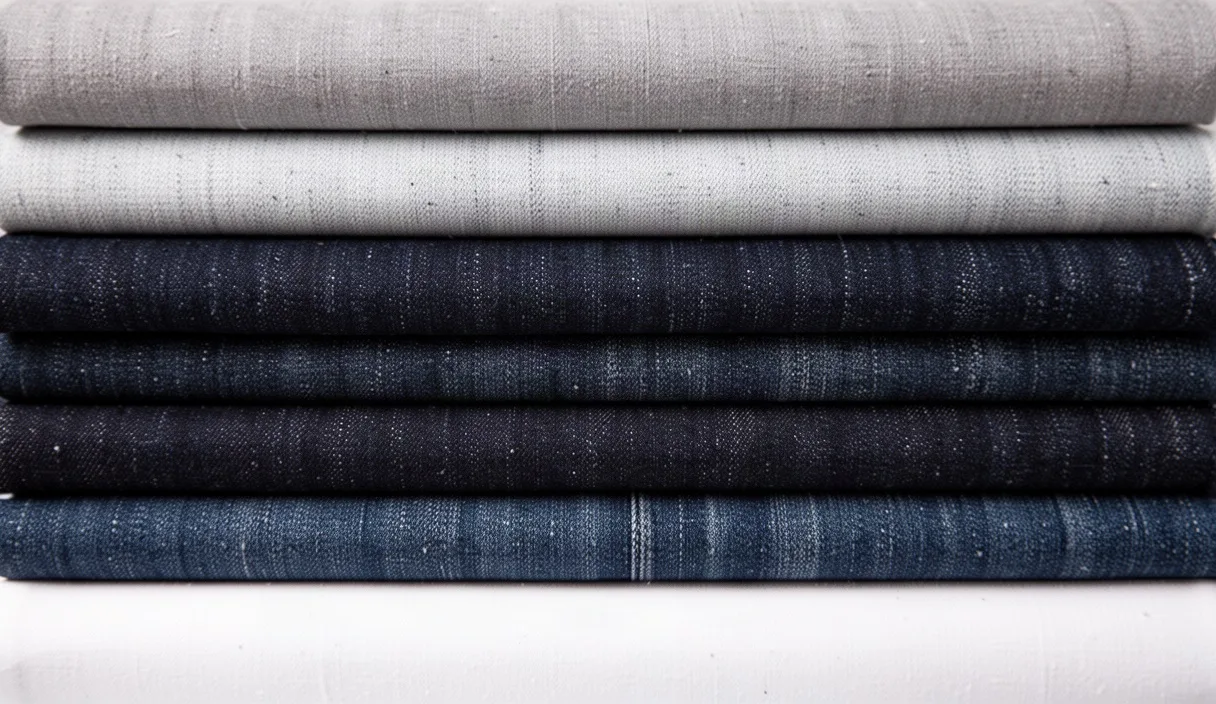
"Raw" denim, also called "dry" denim, refers to fabric that has not been washed, stonewashed, sanded, or otherwise treated for softness or fading after dyeing and weaving. The jeans are cut and sewn directly from the loom-state fabric, which still carries the stiffness and surface sheen imparted by the indigo dyeing and sizing (a starch-based coating applied to the yarn to ease weaving).
Because raw denim has not been pre-distressed, any fading, whiskering (creases behind the knees), or honeycombing (creases behind the knees and at the crotch) develops only through the wearer's own movement and washing habits over months or years. This is the basis of the "break-in" process that raw-denim enthusiasts track and often photograph at intervals.
The opposite of raw denim is "washed" denim, which covers a wide range of treatments: rinsed once to remove excess dye and soften the hand, stone-washed with pumice to create texture and fading, sand-blasted or laser-treated to mimic worn patterns, or chemically treated with enzymes. A pair of jeans can be washed once lightly and still be considered distinct from raw, since even a single wash changes the hand feel and removes some surface indigo.
Raw denim is also usually, though not always, unsanforized or only partially sanforized, meaning it has not been pre-shrunk by the mechanical process (sanforization) that most modern fabric undergoes. Unsanforized raw denim can shrink significantly, commonly in the range of 5 to 10 percent in length and width, when first washed, which is why some brands recommend sizing up and soaking the jeans before the first wash.
Combining Raw and Selvedge: Common Confusion
The confusion between these terms stems from market history rather than any technical overlap. In the mid-20th century, nearly all denim was both raw and selvedge by default, since shuttle looms were the only looms available and pre-washing was not yet standard practice. When wide, high-speed looms and industrial washing became the norm in the 1970s and 1980s, the two attributes became separable, but the association stuck in consumer memory.
Today, brands frequently market "raw selvedge denim" as a single phrase, which is accurate when both attributes are present but misleads buyers into thinking the terms are synonymous. A buyer can own raw denim woven on a modern wide loom with a serged, non-selvedge edge, and that pair is just as "raw" as a selvedge pair, with identical break-in behavior, differing only in the edge finish and the visible chain-stitch hem detail.
Conversely, a buyer can own selvedge denim that has been stone-washed and heavily distressed at the factory. This is common in fashion-forward lines that want the selvedge ID visible on the cuff as a design detail without asking the customer to go through a months-long break-in process. The jeans are selvedge but not raw.
- Raw, selvedge: Unwashed fabric from a shuttle loom; example: many Japanese heritage brands' core lines.
- Raw, non-selvedge: Unwashed fabric from a wide modern loom; common in budget-friendly "raw denim" offerings from larger retailers.
- Washed, selvedge: Pre-distressed fabric from a shuttle loom, selvedge kept visible at the cuff as a style detail.
- Washed, non-selvedge: The vast majority of mass-market jeans sold in department stores.
Visual Identification Tips
The most reliable way to check for a selvedge edge is to look at the outseam (the side seam) at the cuff, where many selvedge jeans are left unhemmed on the inside or finished with a simple chain-stitch rather than a serged overlock stitch. Fold the cuff up and look for a tightly woven band, usually a few millimeters wide, often with a colored thread line running through it.
To check whether denim is raw, examine the surface for sizing residue, a slight stiffness, and a glossy sheen on the face of the fabric. Raw denim also tends to transfer indigo dye onto hands, light-colored furniture, or other fabric during the first several wears, a phenomenon sometimes called "crocking." This dye transfer diminishes noticeably after the first wash.
Bend the fabric at the knee or wrist. Raw, unsanforized denim typically feels stiffer and less pliable than washed denim, almost cardboard-like in heavier weights (over 14 ounces per square yard). If the jeans bend easily and feel soft straight off the rack, they have likely been washed or treated regardless of what the edge looks like.
Check the interior tag or product description for weight in ounces and origin of the fabric. Terms like "sanforized," "rope-dyed," "shuttle loom," or a specific mill name (Kaihara, Cone, Candiani) are useful corroborating details, though a seller's written claim should still be checked against the physical fabric when possible, since labeling accuracy varies by brand.
Price and Durability Differences
Selvedge fabric generally costs more per yard than non-selvedge fabric from the same mill, often by a margin of several dollars per yard, due to the slower production speed and narrower loom width described earlier. This cost difference carries through to retail, where selvedge jeans commonly start around 120 to 180 US dollars for mid-range brands and can exceed 300 dollars for limited-run Japanese selvedge, compared to 40 to 90 dollars for comparable non-selvedge raw denim.
Durability is not strictly tied to either attribute. A heavyweight non-selvedge raw denim (16 ounces) can outlast a lightweight selvedge denim (12 ounces) in terms of abrasion resistance, since durability correlates more closely with fabric weight, yarn twist, and weave density than with loom type or wash state. Selvedge fabric is not inherently stronger; it is simply woven differently at the edge.
| Attribute | Typical retail range (USD) | Primary cost driver |
|---|---|---|
| Non-selvedge, washed | 20 to 60 | Mass production, wide looms, standard finishing |
| Non-selvedge, raw | 40 to 90 | Skips finishing steps; still wide-loom fabric |
| Selvedge, washed | 80 to 150 | Narrow shuttle-loom fabric plus added distressing labor |
| Selvedge, raw | 120 to 300+ | Narrow shuttle-loom fabric, no finishing, often small-batch mills |
Longevity in practice depends heavily on care: raw denim washed infrequently (every 3 to 6 months, as many enthusiasts recommend) tends to show less fading from washing abrasion and more fading from wear contrast, while frequently washed denim, selvedge or not, loses surface indigo faster regardless of loom type.
Which Type Suits Which Buyer
Buyers who want visible, gradual fading tied to their own body movement, and who don't mind a break-in period of stiffness lasting several weeks to a few months, should prioritize raw denim first and treat selvedge as a secondary preference. The edge finish has no effect on how the fade pattern develops on the thighs, knees, or waistband.
Buyers who want the look of a cuffed selvedge line as a style detail, without the maintenance of raw denim (infrequent washing, initial stiffness, dye transfer), should look for washed selvedge jeans, which give the visible colored-thread cuff without the break-in commitment.
Buyers on a tighter budget who still want the raw-denim fading experience can get it from non-selvedge raw denim at roughly a third to half the price of comparable selvedge raw denim, since the fading mechanism depends on the dye and weave density, not the edge finish.
Buyers who primarily want durability for work or daily heavy use should focus on fabric weight (14 ounces and above) and weave type (sanforized for predictable sizing) rather than selvedge status, and should consult the specific brand's care instructions, since shrinkage and wash guidance vary by mill.
Common mistakes
Assuming "selvedge" guarantees higher quality overall: it guarantees a specific edge-weaving method and often higher fabric cost, but not superior yarn, dye, or construction on its own.
Assuming "raw" jeans will fit the same after the first wash: unsanforized raw denim can shrink 5 to 10 percent, so buyers who size for a snug raw fit often end up with jeans that are too tight after washing unless they sized up deliberately.
Washing raw denim too soon or too often in the mistaken belief that it needs "breaking in" through washing: most fading enthusiasts recommend delaying the first wash for at least a month of regular wear and spacing washes out afterward, since washing resets fade progress rather than accelerating it.
Next steps for buyers
Decide first whether the priority is fade development (raw) or edge aesthetics (selvedge), since these are independent purchase criteria. Check the fabric weight and sanforization status on the product tag before buying, and if shrinkage or sizing is unclear, contact the brand directly or consult their published sizing guide rather than guessing. For high-value purchases above roughly 150 dollars, verify mill sourcing claims against the brand's own documentation when available, since marketing language around "selvedge" and "raw" is not regulated and varies in accuracy across retailers.