 The Drape Review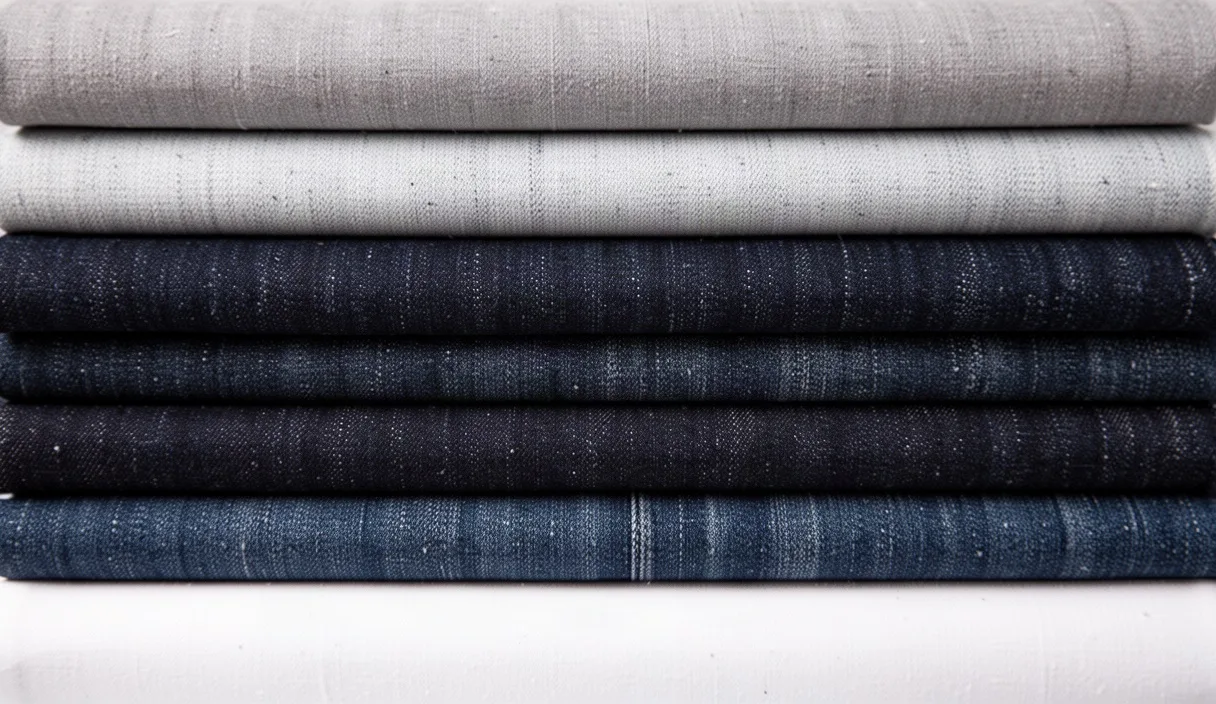
Denim weight is one of the few specifications printed directly on a garment's hangtag, yet it is also one of the most misunderstood. The number, expressed in ounces per square yard (oz/sq yd or simply "oz"), tells you how dense the woven fabric is before it is cut and sewn. It does not, by itself, tell you how the jeans will fit, how long they will last, or how they will feel against skin in July versus January. Those outcomes depend on weight combined with weave, yarn construction, and finishing.
This article compares three benchmark weights, 9oz, 12oz, and 16oz, that cover the practical range most consumers will encounter in jeans, jackets, and workwear. Each weight class has documented trade-offs in drape, break-in time, abrasion resistance, and seasonal comfort. The goal here is to state those trade-offs plainly so the choice can be made by intended use rather than by marketing language on a label.
How Denim Weight Is Measured
Denim weight is calculated by weighing one square yard of finished, undyed fabric (sometimes measured after indigo dyeing, depending on the mill's reporting convention) and expressing the result in ounces. A mill will cut a sample swatch, weigh it on a calibrated scale, and convert the measurement to the oz/sq yd standard used across the US and most global denim trade. In metric-reporting regions, the same property is given in grams per square meter (gsm); 9oz denim corresponds to roughly 305 gsm, 12oz to about 405 gsm, and 16oz to approximately 540 gsm.
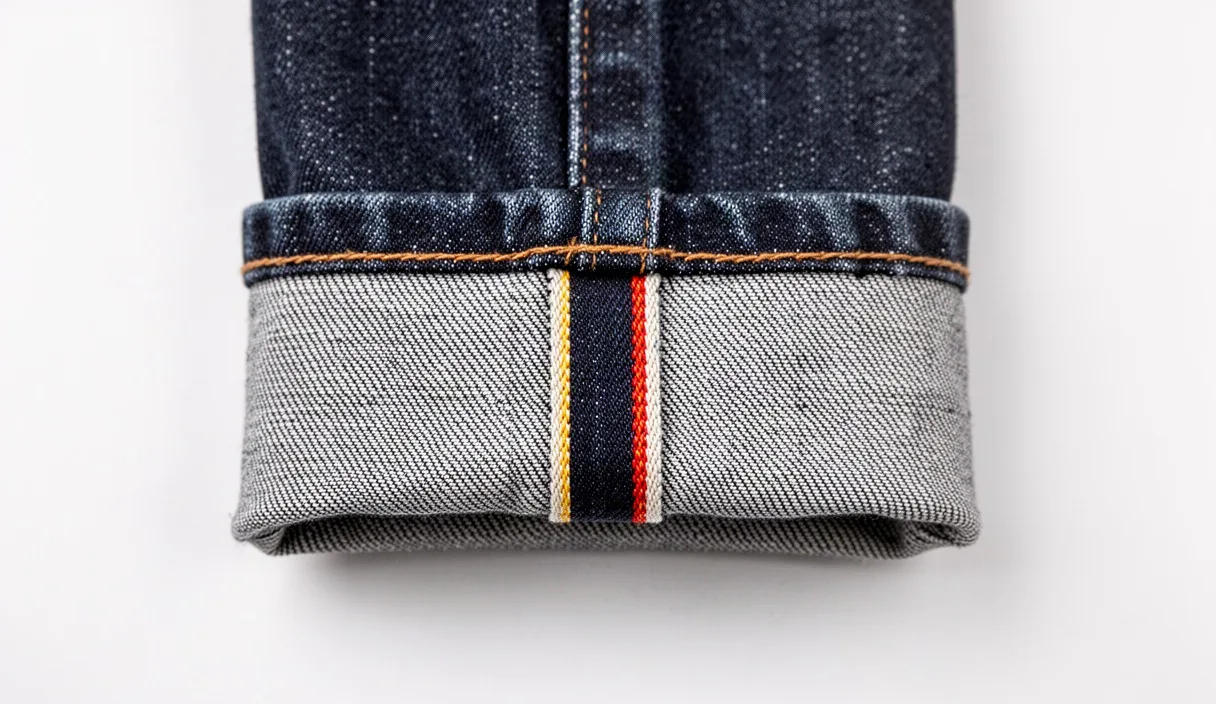
Weight is a function of yarn thickness and thread count, not of fiber content alone. Two fabrics can both be 100% cotton and both be 12oz, yet have different hand and durability if one uses a tighter weft insertion or a heavier ring-spun yarn. This is why weight should be read alongside weave type (3x1 right-hand twill, broken twill, etc.) and yarn construction (ring-spun versus open-end) when evaluating a garment.
It is also worth noting that weight is measured on greige or finished fabric before cutting, not on the assembled garment. A pair of jeans made from 12oz denim will weigh less per square yard once cut, hemmed, and fitted with pockets, rivets, and a zipper than the raw yardage would suggest, because seams overlap and some fabric is trimmed as waste.
9oz Denim: Characteristics and Uses
Denim at 9oz sits at the lightweight end of the range commonly used for apparel. It is woven with finer yarns and a lower thread density than mid or heavyweight cloth, which produces a fabric with noticeable drape and minimal structure when held up unworn. This is the weight most associated with warm-climate jeans, shirting-weight jackets, and summer overshirts.
Because the yarns are thinner, 9oz denim reaches a broken-in, soft hand faster than heavier alternatives, often within a handful of wears rather than weeks. The trade-off is reduced abrasion resistance: high-friction areas such as inner thighs, back pockets, and cuffs will show wear, including thinning and eventual holes, sooner than in heavier fabric under the same use pattern.
Typical applications for 9oz denim include:
- Warm-weather five-pocket jeans intended for daily wear in temperatures above roughly 75°F (24°C)
- Lightweight denim shirts and overshirts layered over a t-shirt
- Skirts, dresses, and other garments where drape matters more than structural rigidity
- Travel or packable denim items where garment weight and bulk in a bag are a concern
12oz Denim: Characteristics and Uses
Twelve-ounce denim is the most commonly produced weight in mainstream jeans manufacturing, largely because it balances comfort, structure, and durability without requiring the extended break-in period associated with heavier cloth. Most mall-brand and mid-market denim labeled simply "denim" without a weight specified falls in the 11.5oz to 13oz range.
At this weight, the fabric holds its shape well enough to resist excessive stretching at the knees during a day of wear, yet it is still pliable enough to be comfortable within the first one to three wears. Fades develop at a moderate pace: whiskering and honeycombs at the knees and hips typically become visible after 20 to 40 wears in raw or rigid 12oz denim, depending on wearer activity and whether the jeans are washed during that period.
Twelve-ounce denim is the default recommendation for a first pair of raw or selvedge jeans, a daily-wear five-pocket jean, and light outerwear such as a trucker jacket. It performs adequately across a wider temperature range than 9oz, generally comfortable between 50°F and 80°F (10°C to 27°C) with appropriate layering at the extremes.
16oz Denim: Characteristics and Uses
At 16oz and above, denim enters heavyweight territory associated with workwear, cold-climate jeans, and collector-grade raw selvedge. The yarns are thick, the weave is dense, and the fabric is noticeably stiff off the shelf, standing away from the body rather than draping against it. New wearers of 16oz raw denim commonly report a break-in period of 30 to 60 days of regular wear before the fabric softens enough to move naturally with the body.
The density that causes this stiffness also produces measurably higher abrasion resistance. Workwear brands have historically specified denim in the 14oz to 21oz range for garments intended to withstand repeated contact with rough surfaces, machinery, and tools, where tear strength and resistance to localized wear matter more than initial comfort.
Heavyweight 16oz denim carries specific handling considerations:
- It retains heat effectively, making it suitable for cold climates but uncomfortable in sustained heat above roughly 75°F (24°C) for most wearers
- It requires a longer soak and air-dry cycle when washed, often 24 to 48 hours to fully dry depending on humidity, because the dense weave holds water
- Hemming and sewing require a heavier-duty machine needle, typically a size 18 or larger, since standard household machines can struggle with multiple layers of 16oz fabric at the inseam
- It is substantially heavier as a finished garment, with a pair of jeans often weighing 1.5 to 2 pounds (680 to 900 grams) more than an equivalent 9oz pair
Weight vs Durability: What Actually Changes
Heavier denim is generally more abrasion-resistant, but weight alone does not guarantee a longer garment life. Yarn construction plays an equal or greater role: ring-spun yarns, which are spun with more twist and retain shorter fiber lengths intertwined more tightly, tend to be more durable than open-end yarns at the same weight, because open-end spinning produces a looser, more irregular yarn that abrades faster.
Weave type also affects wear patterns independent of weight. A 3x1 right-hand twill denim will show a different fade and wear pattern than a broken twill or a left-hand twill at the same weight, because the diagonal structure determines how stress is distributed across the fabric during movement. Left-hand twill denim, for example, is generally considered to produce a softer hand at a given weight than right-hand twill.
| Property | 9oz | 12oz | 16oz |
|---|---|---|---|
| Typical break-in period | 1-5 wears | 5-15 wears | 30-60 days |
| Relative abrasion resistance | Lower | Moderate | Higher |
| Drape off the body | Soft, falls close to leg | Moderate structure | Stiff, stands away from leg |
| Comfortable temperature range (approx.) | Above 75°F / 24°C | 50-80°F / 10-27°C | Below 60°F / 16°C |
In practice, a well-constructed 12oz jean with ring-spun yarn can outlast a poorly woven 16oz jean with open-end yarn in high-friction areas such as the inner thigh. Weight should be treated as one variable among several, not a standalone durability score.
Climate and Comfort Considerations
Fabric weight directly affects thermal insulation because denser weaves trap more air and body heat between fibers. Wearers in climates with sustained summer temperatures above 85°F (29°C) commonly report discomfort and visible sweating through jeans heavier than 12oz, particularly in non-air-conditioned environments.
Humidity compounds this effect. Heavyweight denim absorbs moisture readily and dries slowly, which means in humid climates a 16oz jean may remain damp from sweat for hours after a single wear, creating conditions that some wearers find uncomfortable and that can, over repeated cycles without adequate drying, contribute to fabric odor retention. If skin irritation, rash, or unusual itching develops from prolonged contact with heavy, damp denim, a dermatologist should be consulted rather than relying on general fabric advice.
Layering is the practical adjustment for weight mismatches. A 9oz jean can be made viable in cooler weather with thermal leggings or tights underneath, while a 16oz jean can be made tolerable in moderate heat by choosing a looser fit that allows airflow between fabric and skin.
Choosing Weight by Intended Use
Selecting denim weight is a matter of matching the fabric's documented behavior to the specific conditions of use rather than assuming heavier always means better. The following guidelines reflect common industry and consumer reporting:
- For year-round, climate-controlled daily wear in temperate regions, 12oz to 13oz denim offers the broadest practical range.
- For hot climates or summer-specific garments, 8oz to 10oz denim reduces heat retention and speeds break-in.
- For cold climates, workwear, or raw denim intended to develop pronounced, long-term fades, 14oz to 18oz denim provides the structure and durability needed for extended ownership.
- For garments expected to see heavy abrasion, such as work pants used around machinery or tools, weights above 14oz paired with ring-spun yarn are generally recommended by workwear manufacturers.
Common mistakes
Buyers frequently assume that a higher ounce number always indicates a higher-quality garment, when weight is independent of yarn quality, weave precision, and finishing. A cheaply woven 16oz fabric can fade unevenly and wear out at stress points faster than a well-constructed 11oz fabric.
Another common error is purchasing heavyweight raw denim without accounting for the break-in period, leading to early disappointment when the fabric feels stiff or uncomfortable in the first two to three weeks, before the natural softening process has had time to occur.
Finally, some buyers wash heavyweight denim too frequently, not realizing that dense weaves trap water and can take two full days to dry; this leads to mildew smell or color bleeding if the garment is stored damp.
Next steps
Check the hangtag or product description for both the ounce weight and the yarn construction (ring-spun or open-end) before purchasing, since the combination of the two determines actual performance. If the weight is not listed, contact the retailer or brand directly, as reputable denim manufacturers typically publish this specification. For a first purchase, 12oz ring-spun denim in a 3x1 right-hand twill is a reasonable, low-risk starting point that balances comfort and durability across most climates and use cases.