 The Drape Review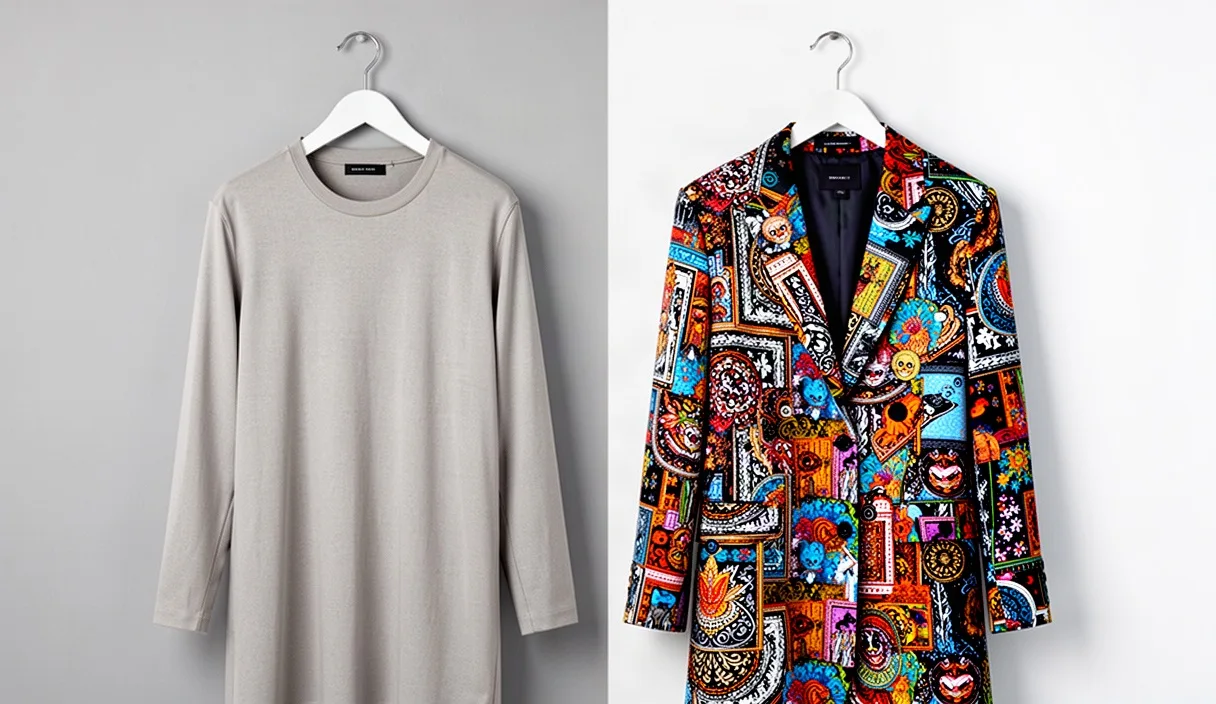
Minimalist and maximalist dressing are often presented as opposites on a style spectrum, but both are organizing principles rather than fixed rulebooks. Each dictates how a person selects, stores, and replaces clothing, and each carries measurable consequences for budget, closet space, and the time spent getting dressed each morning. Understanding the mechanics of both systems, rather than their aesthetic reputations, makes it easier to decide which one (or which hybrid) fits a given life stage, job, and climate.
This article defines each approach in concrete terms, compares their practical costs, and addresses the decision-making load they create. It closes with guidance on combining elements from both and identifying which lifestyle factors tend to favor one system over the other.
Defining Minimalist Dressing
Minimalist dressing is a wardrobe strategy built on a reduced number of items, usually selected for cross-compatibility rather than individual statement value. A minimalist wardrobe commonly contains between 30 and 50 total garments, including outerwear and shoes, though some practitioners of the "capsule wardrobe" method work with as few as 25 pieces per season.
The defining feature is not the absence of color or pattern, despite the common association with black, white, and neutral tones. The defining feature is a deliberate limit on quantity combined with a high rate of item reuse. A minimalist might own one navy blazer worn 40 times a year rather than four blazers worn 10 times each.
Common structural choices within minimalist systems include:
- Capsule wardrobes: a fixed set of garments, often 30 to 40 pieces, rotated across a season and reassessed every three to four months.
- Uniform dressing: wearing a nearly identical outfit daily, varying only by layer or accessory, as practiced by figures such as Steve Jobs with his black turtleneck.
- Color-locked palettes: restricting the wardrobe to two or three base colors plus one or two accent colors to guarantee that any top can pair with any bottom.
Minimalist dressing does not require spending less on individual items. Some minimalist wardrobes rely on fewer but more expensive garments, on the assumption that higher per-wear cost efficiency offsets the higher sticker price.
Defining Maximalist Dressing
Maximalist dressing is a wardrobe strategy built on variety, layering, and visual abundance, typically favoring pattern mixing, color contrast, and accessory stacking over repetition. A maximalist closet can hold anywhere from 150 to 400 pieces, with turnover driven by trend cycles, mood, or seasonal collecting rather than a fixed rotation schedule.
The approach is sometimes summarized by the phrase "more is more," a direct rebuttal to the minimalist "less is more" ethos. Maximalist dressing treats clothing as a medium for self-expression first and functional efficiency second, which means outfits are frequently constructed, not simply pulled from a short rotation.
Typical maximalist techniques include:
- Pattern clashing: combining two or more patterns, such as plaid and floral, in a single outfit, a technique associated with designers like Iris Apfel.
- Color blocking across multiple hues: wearing three or more saturated colors in one look rather than the one-or-two-color discipline common in minimalist dressing.
- Accessory layering: stacking rings, scarves, bags, and jewelry in combinations that change daily, sometimes six or more accessory items per outfit.
Maximalist dressing requires more storage infrastructure. A household practicing this approach often needs supplementary storage, such as a second closet rod, garment racks, or under-bed bins, because standard closet space (commonly built for 60 to 80 hanging items) is insufficient for 200-plus pieces.
Cost and Maintenance Differences
The financial profile of each system differs in structure, not necessarily in total annual spend. Minimalist wardrobes concentrate spending on fewer, often higher-cost items, while maximalist wardrobes spread spending across many lower-to-mid-cost items, frequently supplemented by secondhand or fast-fashion purchases to sustain variety.
Maintenance costs also diverge. Fewer pieces worn more frequently in a minimalist system wear out faster per item, which means higher per-item replacement frequency, typically every one to three years for frequently rotated staples like daily-wear trousers. Maximalist wardrobes distribute wear across more items, so individual pieces last longer in calendar time but a larger number of items require periodic laundering, dry cleaning, or repair at any given point.
| Factor | Minimalist Approach | Maximalist Approach |
|---|---|---|
| Typical wardrobe size | 30 to 50 pieces | 150 to 400 pieces |
| Spending pattern | Concentrated, fewer high-cost items | Distributed, many mid-to-low-cost items |
| Storage needs | Standard closet sufficient | Often requires supplemental storage |
| Per-item wear rate | High | Low to moderate |
| Laundry frequency | Higher per item | Lower per item, higher total load variety |
Dry cleaning costs can become a meaningful factor for maximalist wardrobes that include specialty fabrics such as velvet, silk, or sequined pieces, which often cannot be laundered at home and may cost 8 to 20 dollars per garment per cleaning cycle depending on region. Minimalist wardrobes built around machine-washable wool, cotton, and synthetic blends tend to avoid this recurring expense.
Decision Fatigue and Daily Practicality
Decision fatigue refers to the measurable decline in decision quality after repeated choices, a concept studied in behavioral psychology and frequently applied to wardrobe selection. Minimalist systems are designed to reduce the number of micro-decisions made each morning, since a smaller, pre-matched set of garments narrows the combinations to choose from.
A minimalist with 35 interchangeable pieces might face fewer than 10 meaningful outfit decisions per week, because most combinations are functionally equivalent. A maximalist with 300 pieces, by contrast, may spend 10 to 20 minutes assembling an outfit on days requiring a specific color story or pattern balance, though many maximalist dressers report that the selection process itself is part of the enjoyment rather than a burden.
Practical trade-offs to consider:
- Minimalist systems reduce morning decision time but offer less flexibility for sudden dress-code changes, such as an unplanned formal event.
- Maximalist systems provide more options for varied occasions but require more physical searching through a larger closet, which can add several minutes to daily dressing time.
- Travel packing is generally faster with a minimalist wardrobe, since most pieces are already proven to coordinate, reducing the risk of packing mismatched items.
Mixing Elements From Both Approaches
Neither philosophy requires full commitment. A hybrid structure, sometimes called a "curated maximalist" or "expanded capsule" wardrobe, applies minimalist selection discipline to a larger maximalist-sized collection.
One practical hybrid method: maintain a core rotation of 20 to 25 neutral, highly compatible pieces (the minimalist layer) and supplement it with a rotating secondary collection of 40 to 60 statement items, such as patterned jackets, bold accessories, or seasonal color pieces (the maximalist layer). The core layer handles roughly 70 to 80 percent of wear days; the statement layer is deployed selectively for specific occasions or moods.
Another hybrid approach restricts maximalist expression to a single category. For example, a person might keep clothing minimal (10 to 15 tops, 8 to 10 bottoms, all neutral) while allowing an extensive accessory or jewelry collection to carry the visual variety, since accessories require less storage per item and are generally cheaper to rotate than full garments.
This category-limited hybrid is common among professionals who need outfit consistency for client-facing roles but still want a creative outlet within dress code boundaries.
Which Approach Suits Which Lifestyle
Lifestyle factors that tend to favor minimalist dressing include frequent travel, small living spaces with limited closet square footage, high-decision-volume jobs where reducing unrelated choices preserves mental bandwidth, and budgets that favor concentrated spending on fewer durable items.
Lifestyle factors that tend to favor maximalist dressing include creative or client-visible industries where visual variety signals personality or brand (fashion retail, art direction, entertainment), larger living spaces with dedicated closet or dressing rooms, and personal temperaments that find the process of outfit construction enjoyable rather than draining.
Climate also plays a measurable role. Regions with four distinct seasons and wide temperature swings often push wardrobes toward maximalist sizing by necessity, since a household may need separate functional sets for 30-degree winters and 90-degree summers, effectively doubling or tripling the minimum viable wardrobe size regardless of stated philosophy.
Common Misconceptions About Both Styles
A frequent misconception is that minimalist dressing is inherently cheaper. In practice, many minimalist wardrobes rely on items priced at 150 to 400 dollars per piece on the assumption of multi-year durability, which can exceed the total cost of a maximalist wardrobe built from lower-cost, higher-turnover pieces.
A second misconception is that maximalist dressing is inherently disorganized. Many maximalist wardrobes rely on strict categorization systems, such as color-coded closet sections or digital outfit-logging apps, to manage the larger inventory; without this structure, the approach does become harder to maintain, but structure is a maintenance choice, not an inherent property of the style.
A third misconception treats the two approaches as mutually exclusive personality traits rather than adjustable systems. Both labels describe a wardrobe structure at a point in time; a person can shift from one to the other across life stages, such as adopting a minimalist approach during a period of frequent relocation and reverting to a maximalist approach once settled.
Practical Next Steps
Readers deciding between the two systems can start with a short audit rather than a full wardrobe overhaul. Count current garments, note how many were worn in the last 30 days, and compare that figure to total wardrobe size; a low ratio (for example, wearing fewer than 20 percent of owned items monthly) often signals that a reduction toward minimalist principles would reduce clutter without reducing functional options.
Those drawn to maximalist dressing but concerned about cost or storage can trial the approach within a single category, such as scarves or jewelry, for one season before expanding to full-garment variety. This limits financial exposure while testing whether the added decision time and storage demand fit daily routines.
For anyone managing a wardrobe transition alongside a significant budget change, a professional financial or organizational consultant can help structure a realistic spending and storage plan; this article does not substitute for that individualized guidance.