 The Drape Review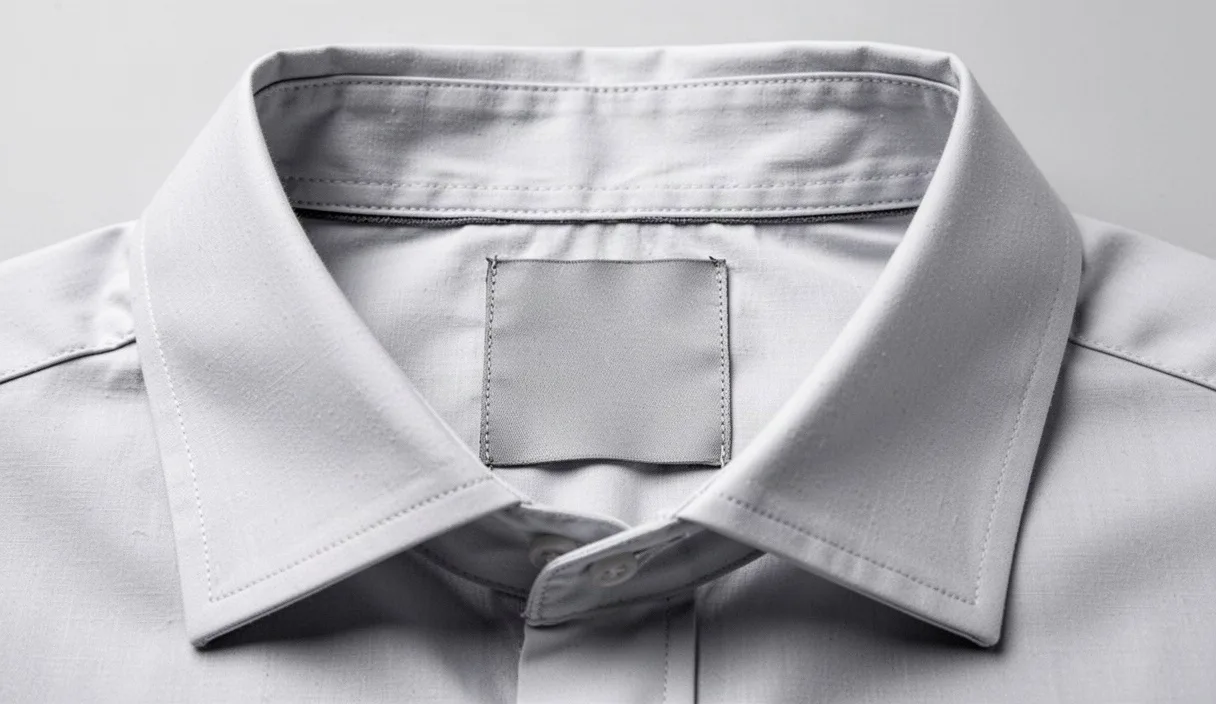
Garment care labels use a standardized system of symbols, originally developed by international textile bodies such as GINETEX in Europe and the American Society for Testing and Materials (ASTM) in the United States, to communicate how a fabric should be washed, dried, ironed, and professionally cleaned. Because these symbols are designed to cross language barriers, they rely on shapes and internal marks rather than words, which means a wash tub, a triangle, a square, a circle, and an iron each carry a fixed meaning regardless of the garment's country of origin.
Misreading a label is one of the most common causes of fabric damage, color bleed, shrinkage, and fiber breakdown in home laundering. This guide walks through each symbol family in the order they typically appear on a label, explains what the underlying lines and dots mean, and flags the mistakes that lead to ruined garments.
Why Care Labels Matter
A care label is not a suggestion; it is the manufacturer's documented statement of the conditions under which the fabric, trims, linings, and any bonded layers were tested to perform without damage. Many garments combine multiple materials, for example a wool shell with a polyester lining and metal zipper, and the printed symbols reflect the most restrictive requirement among those components, not just the outer fabric.
In the United States, care labeling is required by the Federal Trade Commission's Care Labeling Rule (16 CFR Part 423) for most textile apparel, which obligates manufacturers to provide at least one method of care that will not harm the garment. This is a legal minimum disclosure, not a guarantee of performance under every possible washing condition, so unusual results with an unfamiliar fabric blend are not automatically a labeling error.
Labels typically appear in a fixed sequence: washing, bleaching, drying, ironing, and professional care. Reading them in that order matters because later symbols sometimes modify earlier ones, such as a drying symbol that restricts heat after a washing symbol has already permitted a specific temperature.
Washing Symbols: Temperature and Cycle
The washing symbol is a square-ish wash tub (sometimes shown as a basin with a wavy water line). Inside the tub, a number indicates maximum water temperature in degrees Celsius, and lines beneath the tub indicate the agitation level the fabric can tolerate.
- No lines under the tub: normal machine wash cycle is acceptable.
- One line under the tub: permanent press cycle, meaning reduced agitation and a cooler rinse to limit wrinkling.
- Two lines under the tub: gentle or delicate cycle, used for loosely woven or fragile fibers such as silk blends or lightweight rayon.
- A hand inside the tub: hand wash only; machine washing, even on delicate, risks felting or distortion.
- A crossed-out tub (an X over the symbol): do not wash in water at all; the garment requires dry cleaning or specialized care.
The number inside the tub is the ceiling, not a target. A label reading "30" permits any wash at or below 30°C (86°F); washing at 40°C will often cause shrinkage in natural fibers like cotton and wool, because fiber proteins and cellulose structures contract when heated past their tested threshold. If no number appears, the tub typically defaults to the hottest setting the fabric can tolerate on a standard machine, which varies by manufacturer, so it is safer to treat an unmarked tub as a 40°C maximum unless other context (like a wool care guide) suggests otherwise.
Bleaching Symbols
The bleaching symbol is a triangle. An empty, unmarked triangle means any bleach, chlorine or oxygen-based, can be used as needed. A triangle with two diagonal lines inside permits only non-chlorine, oxygen-based bleach, which is the common requirement for colored fabrics that would fade or discolor under chlorine bleach. A triangle with an X through it prohibits all bleach.
This distinction matters practically: oxygen bleach (sodium percarbonate-based products) works through a slower oxidation reaction and is generally safer for color retention, while chlorine bleach (sodium hypochlorite) is a stronger oxidizer that can strip dye and weaken protein fibers like wool and silk on contact, sometimes within a single wash cycle. A garment labeled with the crossed-out triangle should never be treated with either type, including "color-safe" bleach products, since those still contain oxidizing agents the fabric was not tested against.
If a stain treatment is needed on a garment marked with the no-bleach symbol, spot-testing a stain remover on an inside seam first, or consulting a professional cleaner, is the safer path rather than assuming a product labeled "gentle" is equivalent to no bleach at all.
Drying Symbols
Drying symbols come in two main shapes: a square represents tumble drying guidance when it contains a circle, and a plain square (sometimes with lines or curves) represents line or flat drying.
| Symbol | Meaning |
|---|---|
| Square with circle, one dot inside | Tumble dry on low heat |
| Square with circle, two dots inside | Tumble dry on medium or normal heat |
| Square with circle, no dots | Tumble dry, any heat |
| Square with circle and X | Do not tumble dry |
| Square with horizontal line | Dry flat, usually to preserve shape in knits |
| Square with three vertical lines | Line dry (drip dry), common for shirts and linens |
| Square with a curved top line | Dry in shade, to prevent UV fading |
Heat in a dryer accelerates shrinkage in roughly the same way hot water does, but with the added mechanical stress of tumbling, which is why many knit garments marked safe for machine washing still carry a "dry flat" instruction. A sweater tumble-dried against this instruction can lose several centimeters of length in a single cycle due to felting of the wool fibers, a process that is not reversible by re-wetting or stretching.
Ironing and Steaming Symbols
The ironing symbol is a simple iron shape, and dots inside it indicate maximum safe temperature, similar in logic to the tumble-dry dots.
- One dot: low heat, around 110°C (230°F), appropriate for synthetics like acrylic, nylon, and some polyester blends.
- Two dots: medium heat, around 150°C (300°F), typically for wool and polyester-cotton blends.
- Three dots: high heat, around 200°C (390°F), for cotton and linen.
- Crossed-out iron: do not iron at all; this often appears on garments with heat-sensitive embellishments, sequins, or certain elastane blends.
- Iron with lines underneath and an X through steam vents (or the word "no steam" in some regional labels): steam specifically should be avoided, even if dry ironing at low heat is permitted.
Steam restrictions are worth noting separately from heat restrictions because steam introduces moisture that can cause water spotting on fabrics like silk taffeta or create permanent shine marks on dark wool, even when the dry heat itself would be tolerated. When a steam prohibition is present, a pressing cloth and dry iron at the listed temperature is the usual safe alternative.
Professional Care Symbols
The professional care symbol is a circle. An empty circle generally indicates that dry cleaning is required, though regional variations exist: in the European GINETEX system, letters inside the circle (A, P, F) specify which solvents a professional cleaner should use, while in the United States, the letter "P" typically appears for standard dry cleaning solvents and "F" for a more limited petroleum-based solvent.
A circle with an X through it means the garment cannot be dry cleaned under any commercial process and must rely entirely on the washing instructions provided elsewhere on the label. A circle with a hand inside, used in some wet-cleaning systems, indicates professional wet cleaning, which is a controlled, machine-based water process distinct from both home laundering and traditional solvent dry cleaning.
Garments bearing the dry-clean symbol can sometimes be hand washed successfully at home, particularly unstructured items without interfacing or lining, but this carries real risk for tailored pieces with internal canvas, fusible interfacing, or structured shoulders, since those components are not visible on the outside and may not tolerate water at all. When the construction of a garment is unclear, or when a dry-clean-only label covers a formal or structured piece, consulting a professional cleaner before attempting any home method is the more reliable choice.
Common Label Mistakes to Avoid
The most frequent error is reading the washing temperature number as a target rather than a ceiling, which leads to washing a "30°C max" garment in a "warm" machine setting that actually runs closer to 40°C. Checking the machine's actual water temperature, not just the dial label, avoids this gap.
A second common mistake is treating "no bleach" and "oxygen bleach only" as interchangeable; using chlorine bleach on a garment marked with the two-line triangle can cause irreversible yellowing or fiber weakening within one wash.
A third mistake is ignoring the drying symbol because the washing symbol allowed machine washing; the two symbols are independent instructions, and a garment can be machine washable while still requiring flat drying to avoid shrinkage or shape loss.
A fourth mistake is assuming all dry-clean-only labels are purely cautionary. Some genuinely reflect structural requirements, such as fusible interfacing in a blazer that will bubble or delaminate if soaked in water, a defect that cannot be corrected by re-ironing or re-pressing.
Finally, many care labels fade or detach after repeated washing. Photographing the label before it wears away, or noting the fiber content and symbols in a separate record, preserves the information needed for future cleaning decisions once the physical tag is gone.
Next Steps for Reading Labels Correctly
Before the first wash of a new garment, read all five symbol groups in order, rather than stopping after the washing tub, since drying and ironing restrictions often narrow what the washing symbol initially allows. Keeping a printed reference chart of the five base shapes, tub, triangle, square, iron, and circle, near the laundry area removes the need to memorize every dot and line combination from scratch.
For high-value or structurally complex garments, such as tailored coats, silk formalwear, or pieces with bonded trims, a brief consultation with a professional cleaner before the first cleaning cycle is a reasonable precaution, particularly when the label's symbols conflict with the fiber content listed on the same tag. When in doubt, the most restrictive instruction on the label should govern, since it reflects the most fragile component of the garment rather than the average one.