 The Drape Review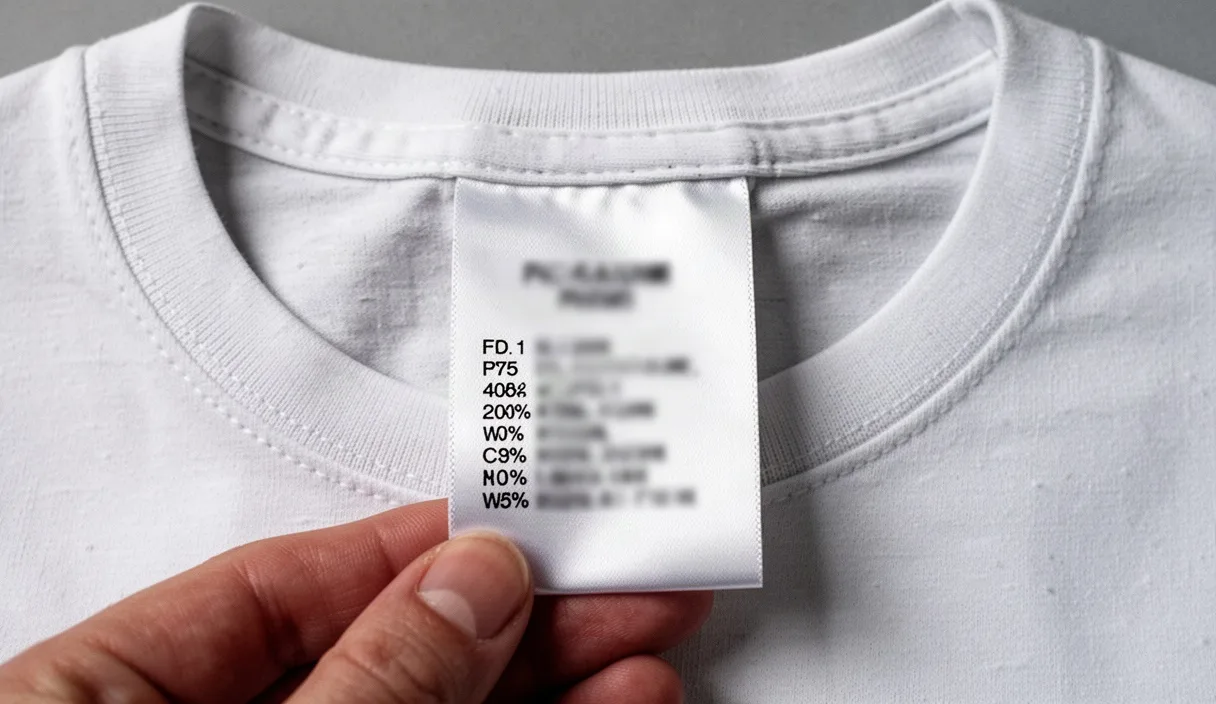
A hang tag that says "eco-friendly" tells you almost nothing on its own. The term has no legal definition in most markets, no required testing, and no penalty for overuse. Reading a sustainability claim correctly means separating what a brand is asserting from what it is actually proving, and knowing which parts of that proof come from the brand itself versus an outside party.
This guide breaks down the vocabulary, the verification mechanisms, and the gaps that remain even when a claim checks out. None of this replaces a lab test or a factory audit; it is a framework for asking better questions before you decide a claim is credible enough to act on.
Common Terms Brands Use and What They Mean
Some terms are regulated in specific contexts, others are marketing shorthand with no fixed meaning. Knowing which category a word falls into changes how much weight it should carry in your decision.
- Organic: When paired with a certification number (such as GOTS, Global Organic Textile Standard), this refers to fiber grown without synthetic pesticides or fertilizers, verified through a chain-of-custody audit. Without a certification reference, "organic cotton" on a tag is an unverified claim.
- Recycled: Can mean pre-consumer waste (fabric scraps from a factory floor) or post-consumer waste (plastic bottles, old garments). These are not interchangeable in environmental impact, but brands rarely specify which one they mean.
- Sustainable: Has no fixed technical definition in textile labeling. It is a brand's self-assessment, not a measurable standard.
- Eco-friendly / green / conscious: Marketing language with no regulatory backing in the United States or the EU as of this writing. The U.S. Federal Trade Commission's Green Guides discourage unqualified use of these terms precisely because they mislead without specifics.
- Carbon neutral: Usually means a company purchased carbon offsets equal to its calculated emissions, not that it emitted less carbon. The offset market itself varies widely in quality and verification rigor.
A useful habit: if a term is not followed by a number, a standard name, or a certifying body, treat it as a brand opinion rather than a documented fact.
Difference Between Certification and Marketing Language
Certification involves an independent body checking a brand's claim against a published standard, usually through document review, facility audits, or product testing. Marketing language is written by or for the brand, with no outside check required.
The distinction matters because certification standards publish their criteria publicly. GOTS, for example, requires that a product contain at least 70% certified organic fiber and sets limits on allowed chemical inputs during processing. OEKO-TEX Standard 100 tests the finished product for a list of regulated substances, not the farming or labor practices behind it. Each certification covers a specific, limited scope, not sustainability as a whole.
Marketing language has no such published criteria. A brand can write "made with care for the planet" on a swing tag with zero documentation behind it, and no regulator will intervene unless the claim is proven deceptive in a specific legal case, which is rare and slow.
| Signal | Certification | Marketing Language |
|---|---|---|
| Who verifies it | Independent third party | The brand itself |
| Published standard | Yes, publicly available | Usually none |
| Scope | Narrow and defined (fiber, chemicals, or labor, rarely all three) | Often broad and vague |
| Renewal/audit cycle | Typically annual | None |
Checking for Third-Party Verification
A certification claim should come with a license or certificate number that can be checked against the certifying body's database. If a brand cites GOTS, the product or supplier should appear in the Global Standard database search tool. If it cites Fair Trade Certified, the Fair Trade USA or Fairtrade International site lists certified facilities and products.
Steps to verify a specific claim:
- Note the exact certification name and any license or scope certificate number printed on the tag or product page.
- Search the certifying body's official database, not a general web search, which can surface outdated or unrelated results.
- Confirm the certificate covers the product category you are looking at (some certifications apply to fiber only, not to the finished garment or the dye house).
- Check the certificate's expiration date; certifications lapse and are not always removed from marketing materials promptly.
If a brand mentions "working toward certification" or "certification in progress," treat this as a stated intention, not a completed verification. There is no standard timeline for how long that process can take, and some brands use the phrase indefinitely.
Supply Chain Transparency Signals
Transparency is not the same as sustainability. A brand can publish its full factory list and still use high-impact materials or pay below a living wage. But a lack of transparency makes any sustainability claim harder to check at all.
Signals worth looking for:
- Factory disclosure: Some brands publish supplier names, locations, and sometimes audit summaries. Patagonia and Everlane, for example, have published supplier lists in past years; the presence or absence of this list is checkable on a brand's own site.
- Tier mapping: Raw material sourcing (Tier 4), fabric milling (Tier 2), and garment assembly (Tier 1) are distinct stages. A brand that discloses only final assembly location is giving partial information; the fiber's origin and processing may remain unknown.
- Traceability tools: Some supply chains use blockchain or QR-code systems that let a shopper trace a garment back through specific production stages. These exist, but adoption is still limited and the underlying data is only as reliable as what was entered into the system.
A brand's sustainability report, if one exists, should specify what percentage of its supply chain is covered by the claims being made. "Our factories are audited" means little if it covers 15% of production volume rather than all of it.
Material Claims vs Process Claims
These two categories get conflated constantly, but they answer different questions. A material claim describes what the fabric is made of. A process claim describes how it was made, dyed, finished, or disposed of.
Examples of material claims: "100% organic cotton," "recycled polyester," "Tencel lyocell fiber." Examples of process claims: "low-impact dyes," "water-saving production," "biodegradable." A garment can satisfy a material claim entirely while failing on process; organic cotton dyed with conventional, high-discharge dyes is still organic cotton, but the environmental benefit of the organic fiber can be offset by the dyeing stage.
Biodegradability claims deserve particular scrutiny. A fiber being technically biodegradable does not mean it will break down in a standard landfill, which is often anaerobic and low-oxygen, a condition under which many "biodegradable" materials degrade far more slowly than advertised. Independent testing standards like ASTM D5511 specify the exact conditions under which a biodegradability claim was measured; without that reference, the claim is unverifiable.
When a brand combines both claim types ("organic cotton, dyed with low-impact process"), check whether each half has its own supporting certification or data point, rather than assuming one claim validates the other.
Questions to Ask Before Trusting a Claim
A short set of questions can filter out most unsupported claims quickly, without needing specialized expertise.
- Is there a certification name and number, or just a descriptive word?
- Does the claim specify a percentage (such as "80% recycled polyester") or is it vague ("made with recycled materials")?
- Does the claim cover the whole garment or one component (a recycled poly lining inside a conventional cotton shell)?
- Can I find this claim verified on a source the brand does not control?
- Does the brand disclose what is not sustainable about the product, or only what is?
A brand willing to state limitations, such as "this garment contains 60% recycled content; the remaining 40% is virgin polyester for durability," is giving you more usable information than one that only states the positive fraction. Specificity, including specificity about shortcomings, is generally a stronger signal than enthusiasm.
Limits of What Labels Can Tell You
Even a verified, specific, third-party-checked claim has boundaries. A certification confirms compliance with its own standard at the time of audit; it does not confirm ongoing compliance, nor does it address categories the standard was never designed to cover.
GOTS certification, for instance, addresses organic fiber content and restricted substances, but does not certify a living wage for workers. Fair Trade certification addresses labor and community standards but does not test for chemical residues in the final product. No single certification currently covers fiber origin, chemical safety, labor conditions, water usage, and end-of-life disposal in one comprehensive check. Reading the fine print of what a specific certification actually measures, usually available on the certifying body's own website, is necessary because the certification's name alone implies a broader scope than it delivers.
Labels also cannot account for scale. A brand producing a small capsule collection under strict certification and a brand producing millions of units with a small certified sub-line can both display the same badge, with very different overall impact. For questions about a specific regulatory claim's legality or a company's environmental liability, consult a consumer protection attorney or an environmental compliance professional rather than relying on label language alone.
Common mistakes
Readers and shoppers tend to repeat a few specific errors when evaluating these claims:
- Treating "natural fiber" as automatically low-impact, ignoring that conventional cotton farming is water- and pesticide-intensive.
- Assuming one certified component (recycled thread, for example) certifies the entire garment.
- Confusing a brand's internal sustainability report with an independently audited document.
- Skipping the expiration or scope check on a certificate number, assuming it is permanently valid.
Next steps
Start by picking one claim from a garment you already own or are considering buying, and run it through the verification steps above: identify the exact wording, look for a certification number, check that number against the certifying body's own database, and note whether the claim covers the material, the process, or both. Repeating this on a handful of purchases builds a working sense of which brands provide checkable specifics and which rely on broad language. For any claim tied to legal compliance, labor standards, or environmental liability, treat this article as a starting framework, not a substitute for advice from a qualified compliance or legal professional.